The next person to be honored as a “Catholic Making a Difference…” is Mr. Glenn Wilke, Executive Director Emeritus of Midtown-Metro Achievement Centers in Chicago. Having led the organization since 2004, he continues to assist with development needs and remains an influential Catholic layman whose example of virtue and service has transformed countless lives.
Glenn, kindly explain for our readers the work of Midtown-Metro.
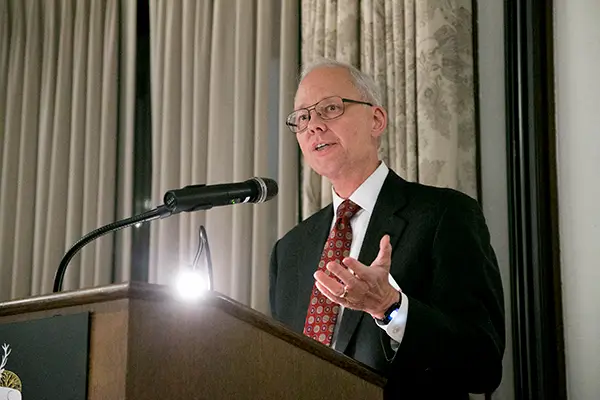 Glenn: Countless kids from Chicago’s tougher neighborhoods face huge obstacles in life: broken families, a lack of good role models, pervasive violence, failing schools, and a good deal more. The Midtown Achievement Center for boys (on the near north side) and Metro Achievement Center for girls (near Greektown) help Chicago’s urban youth get on the right path through after-school and summertime enrichment programs. We strive to instill in these kids the habits and attitudes of achievers. Most important of all, we work to strengthen our students in character since a life of virtue leads to deep happiness.
Having operated since 1965, we now have a great number of walking, talking success stories: “kids” from the program who are now successful, responsible adults with a well-developed sense of service to others. I know many of them personally and can tell you that their lives would have been very different had they not met Midtown-Metro.
Please tell us what in your upbringing and professional life led you, by the grace of God, to your position at Midtown-Metro.
Glenn: In high school I discerned a vocation to Opus Dei. As an adult, I worked for twenty years in the corporate world, ending up as Director of Marketing for Conagra Foods. Someone I knew in Opus Dei told me about an opening at Midtown and recommended that I go for it. I had volunteered as a tutor at Midtown for five years, so I knew it well. The corporate job had become grueling, so I decided it was time to move on and make an impact in the world. The people I worked with thought I was having a midlife crisis! That was not true. It felt like the right thing to do—so I jumped!
You are an Associate Member of the personal prelature of Opus Dei. Our Lord called every person to “take up his Cross and follow [Him]” more than two thousand years ago, so the “universal call to holiness” is not a new thing. But, in your opinion, how did the life and work of St. Josemaría Escrivá enhance our understanding of this holy mandate?
Glenn: St. Josemaría Escrivá showed us that we can sanctify our work every day, in every circumstance of our lives, regardless of our position, and thus change society for the good from within, like leaven.
In what ways do you and the staff at Midtown and Metro communicate that call to holiness to your students, and what kind of difference do you think it makes in their lives?
Glenn: Midtown-Metro is not a Catholic program per se. It is open to students of all faith backgrounds. But it certainly is faith-inspired. It was founded by members of Opus Dei who saw the need to help at-risk youth in Chicago. We teach young people, one by one, about the virtues necessary for a lifetime of success: virtues like honesty, loyalty, generosity, and integrity. Doing so makes a huge difference in their lives, because it leads to enduring happiness.
Ultimately, if you give people that foundation of virtue, they can find God more easily. Without it, God has a tougher time communicating with you.
Your organization serves both boys and girls. We see from events in the news that it is a particularly difficult time to be a young man in this country. How does the Midtown Center for boys address the needs of the young men it serves? What is your most fervent wish for the young men you serve at Midtown?
Glenn: Midtown teaches manliness: things like how to treat a woman, how to treat your parents, how to act with strength and integrity. We challenge the boys to grow in manliness and character. These days we hear that many young men are coming to the faith. They’re searching for something deeper than the silliness they’ve been fed for most of their lives. They know there’s something far better and deeper. My wish is that they find it. When I was in high school, the culture was all about drugs, sex, and rock ‘n’ roll. I was lucky to have older parents who taught me about forgetfulness of self and service to others. I try to pass that on at Midtown.
I have always found the simple but underrated virtue of cheerfulness to be the most distinctive quality of those who take the teachings of your founder seriously. You exemplify that quality. How does that virtue—or the privation of that virtue—specifically affect the lives of families living in underserved communities in Chicago? In the current political and social environment of conflict and polarization, how might the gift of a smile and genuine cheerful interest in another edify the community?
Glenn: St. Josemaría said that we are supposed to be “sowers of peace and joy” to everyone we encounter. The world badly needs that. He also said that the dominant note in family life has to be our smile, “spreading joy like a stone dropped in water.” The families Midtown-Metro serves live on very low incomes in some of the most difficult neighborhoods in Chicago. As one of my predecessors put it, they are “under siege” pretty much every day. So the good cheer and smiling encouragement of our staff and volunteers go a long way.
This attitude helped me as well in the job of running a non-profit, something that has grown ever more complex. St. Josemaría spoke of adopting a “smiling asceticism.” I like that phrase. He defined it as “a sporting, cheerful struggle which eliminates any spiritual ‘hardening of the arteries.’” “Cheerfulness is an essential part of your way,” he said. This is a good thing to recall when funds run low, a key staff member leaves, or other challenges crop up. “We need good humor until the moment of our death,” he said.
Are you willing to share with us a story or two that you consider genuine successes springing from Midtown-Metro’s mission?
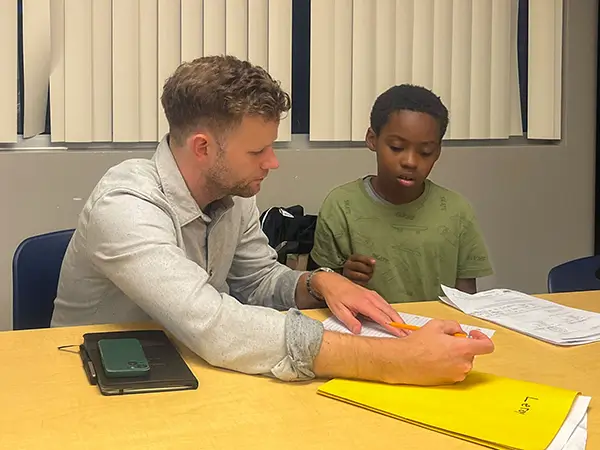 Glenn: Three young men came to the Midtown Center when they were in junior high and stayed through high school. I was their volunteer advisor all that time. They looked up to me, and I challenged them. I made them work hard, think about their actions, and aim high. All three are college graduates, now long-married, working in responsible jobs, and practicing their faith. They remain grateful to Midtown to this day.
Another young man came to Midtown, probably forced to do so by his mother. I was his weekly tutor, traveling after work from Downers Grove to Bucktown to get there. He was sullen. The first session, he didn’t say a word. The second session, not a word. On the third, he finally spoke. “You just come here because you get paid,” he muttered. “I get no pay, and no dinner, either,” I replied. “You mean, you actually care?” he asked. We then became friends, and I was able to help him.
Because we’ve been operating for sixty years, there are thousands of other Midtown-Metro success stories out there.