 The first person to be honored as a “Catholic Making a Difference…” is Miss Nell Andrzejewski, the founder and director of Catholic Church Tours. Founded in 2010, this company provides an opportunity for pilgrims to visit some of Chicago’s most beautiful and historically and architecturally significant Roman Catholic and Byzantine churches under the tutelage of professional guides.
Good day, Nell. Will you please describe for us those factors in your personal background – your family life, your education, your work experience, your faith – that led you to launch Catholic Church Tours?
Nell: So much from the past quietly goes into the work of the present, doesn’t it? As a child, I remember leaving Mass and asking my parents why the priest was looking at us when his words indicated he was actually talking to God. I can also remember walking on worn, winter-weathered, thick red carpet into another church where it was difficult to focus on anything because there was nothing to look at. The abstract art in the missalette and banners for a child was just too – abstract. I did not grow up in an era in which beautiful churches were being built. Not all the churches we attended were ugly. But from a young age, I could distinguish between what was lovely and what uninspiring or even on occasion unsettling. From my earliest years, I longed for beauty.
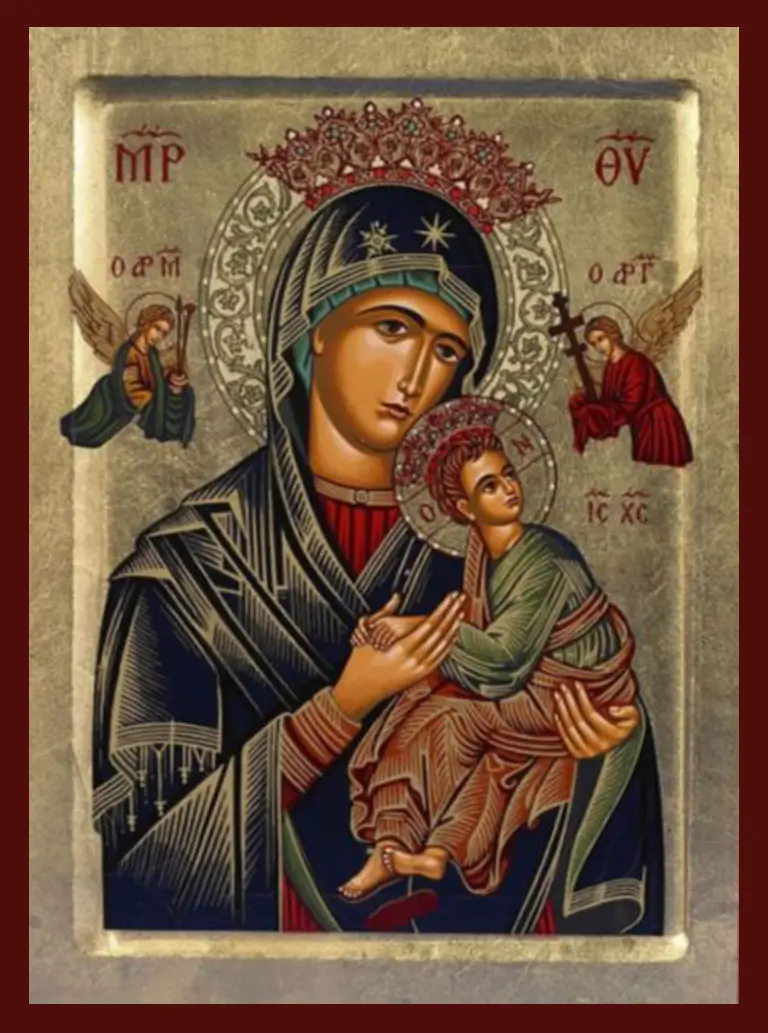
Whatever the aesthetic shortcomings of the physical buildings, however, there was abundant spiritual beauty and inspiration in the priests and others from whose lives and faith I learned so much. Sister Sophia’s habit taught me as much about personal commitment as did the comportment and speaking skills she introduced. Our pastor hosted speakers from all over the world from whom I gained a perspective on the missionary church, the educated church, the married church, the broken church, the One, Holy, Catholic and Apostolic Church. By God’s grace, I was exposed to inspiring spiritual and architectural expressions both within and without my own parish. On one occasion, our youth group attended a festival at a local Greek Orthodox Church. The transcendent other-worldliness of the lamp-lit recesses and mysterious iconography made a lasting impression on me. It seemed that many in our jam-jam, try-to-be-hip, in-it-for-the-eventual-ski-party-trip youth group did not quite know what to do with it, but the place spoke volumes at once to me.
In later years, studying in Rome, I spent long hours in prayer against and under the pillars of the ancient churches of that Eternal City. Within Santa Maria in Trastevere, one of the oldest, I recall praying that I just wanted to live here, in God’s presence, within His beautiful church. Although I started Catholic Church Tours many years later, that prayer probably clinched it for me then.
In brief, what is the nature of your business at Catholic Church Tours and how do you believe it is a venue for bringing the Catholic faith and culture into the public square? Are all of your pilgrims Catholic? How do non-Catholics respond to the churches?
Nell: Catholic Church Tours is an all volunteer-based not-for-profit company that aims to bring as many people as possible to learn about the beautiful Catholic sacred spaces close to home. It is a great way for people of all ages and walks of life to learn something, or learn a little more, about sacred art, architecture and history through amazingly rich day trips. Not all the people who come are Catholic. With groups that are Catholic, we structure the tours along the lines of a pilgrimage. But many are not Catholic, and the tours provide a great setting for anyone to ask questions and explore the transcendent in a place that ordinarily might be inaccessible for them. The guides do a great job of providing historical and cultural context, pointing out otherwise unknown or overlooked connections, and maintaining a reverent hush within the churches that allows for an individual encounter with God.
You bring many school and scouting groups through these beautiful churches. What is the reaction of young people to churches of a style that many of them might never have seen before?
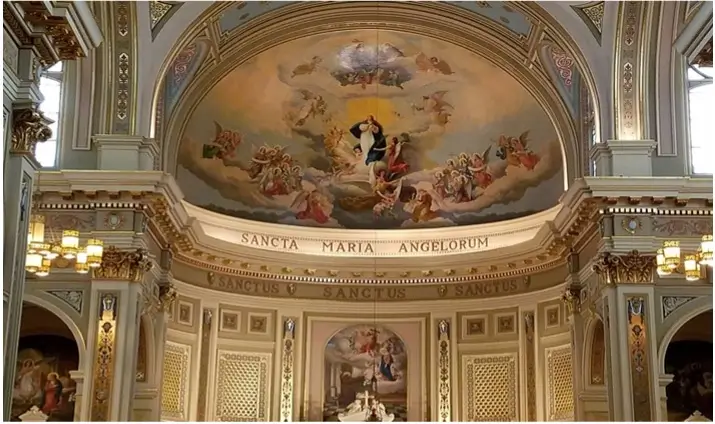
Nell: Field trips are wonderful! The students move faster than adults, with less breadth of experience but with great depth of appreciation and connection. While we regularly witness the sharp intake of breath and wide-open eyes when we open a door and our pilgrims see for the first time the soaring vaults, glittering domes, ornate mural programs and striking stained glass of these churches, the young people are especially expressive in their curiosity and appreciation. On a deep intuitive level and guided by our volunteers, they understand that these are places set aside for a profound encounter with the Divine. Some take lots of pictures; others simply soak it in. All are visibly changed by the experience. It is quite impressive to see them stop and pray, both as individuals, and gathered in groups with their friends.
The churches you visit are not the modern “beige churches” so often disparaged by Bishop Robert Barron. Why do you think that in this utilitarian and minimalist age there remains an enduring interest in the rich colors, noble architecture, elaborate decoration and traditional liturgical traditions of the churches you visit?
Nell: Beautiful churches make sense – literally. They engage our senses on both a conscious and a sub-conscious level. Our senses crave order, natural beauty, and truth formed in any manner that most coherently expresses it. The church building, where heaven and earth meet, is an icon of the Heavenly Jerusalem described in the Book of Revelation. Within a worthy Catholic church building, our pilgrims are treated to the highly textured experience of sights, sounds, and smells that bring them as closely as possible on this earth to the beauty and perfection of Heaven. Visitors often comment on how peaceful such churches are, as if all the little rough edges of their soul were met with the soothing balm of beauty meant exactly for those particular irritations. Finally, there is a subtle message sent to the pilgrim who sees these magnificent churches built for the glory of God – a message that can be applied in their own lives. John Mallin, an esteemed muralist whose work is featured in many of the churches we visit, put it this way: As there is nothing too good for God, so there is nothing too rich or too precious for God’s earthly homes.
GK Chesterton famously said that the “Catholic Church is larger on the inside than it is on the outside.” While he was speaking of the Church’s doctrinal and liturgical riches that are intelligible to the confessing Catholic and not to the non-believer who views the church only from the outside, do you think that “being inside” the beautiful Catholic Churches on your list actually reveals something about the faith that might not otherwise be encountered without access to this kind of goodness, truth and Beauty?
On a spiritual level, one cannot come away from a moment before the Holy Eucharist unchanged. To be in the presence of the Divine is a transformative experience even if an individual is unaware of the Presence. In the same way, but on a sensory level, because the churches we visit are so thoughtfully designed and maintained and so intensely Catholic, the beauty of these churches is both informative and transformative. They are, in fact, “a theology in stone and glass.” For many centuries Catholics learned a great deal about their faith just from looking around during Mass. From the solidity and strength of the Romanesque form, to the light and grace of the Gothic, to the classical symmetry of the Renaissance to the dynamic splendor of the Baroque, architecture speaks a kind of language even if the pilgrim cannot fully articulate what is being said. So many of our pilgrims say something like “Now, this feels like a church!”
Our aim – and blessed success – is to open the doors to an enriching encounter with the Trinity. Massive crucifixes, gorgeous stained glass windows, and wood carved furnishings made to last generations for the glory of God not only turn heads but literally move hearts from places of spiritual dryness to an openness to receive refreshing streams of grace.
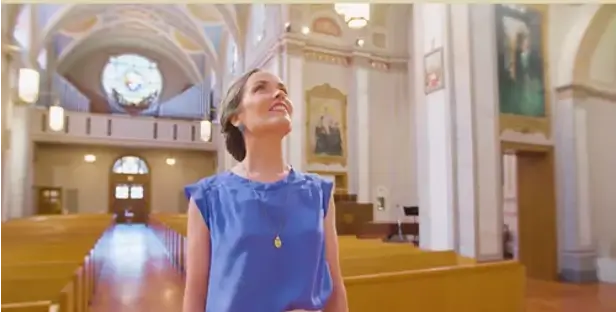
You have recently begun a series with EWTN entitled Hidden Gems: Catholic Shrines Across America for which you visit and narrate tours at some of the nation’s most significant shrines. Can you tell us a little bit about this?
Nell: Our Hidden Gems series is a great way to experience some of America’s most beautiful and significant shrines. What a variety and wealth of treasures we have in our unique American shrines! In this series, we showcase “American” saints from before our country was a country (Shrine of the North American Martyrs), the location of the first Mass prayed on the continental United States (Our Lady of La Leche), shrines that have inspired great inventions (St. Jude and the cardiac pace-maker) and shrines featuring giant statues (Trinity Heights, Queen of Peace), as well as numerous others. These are places specifically designed for pilgrimage. The pilgrims who visit these shrines, either in person or via this series, will learn of the holy people and miracles associated with these holy places. The series provides an avenue of grace to those who are unable to travel personally to these beautiful treasures of the faith. At each shrine, I personally pray for all who will view the show.
If someone is interested in booking a scheduled or custom tour with Catholic Church Tours, what is the best way to contact you?
Nell: Many of our tours are custom tailored for a particular group – from five pilgrims up to bus loads. Contact us at Info@CatholicChurchTours.com, and one of our dedicated volunteers will work with you to tailor an exploration for your family, club, park district, school or parish.